
What Happens When You Oversell (And How Resellers Are Preventing It)

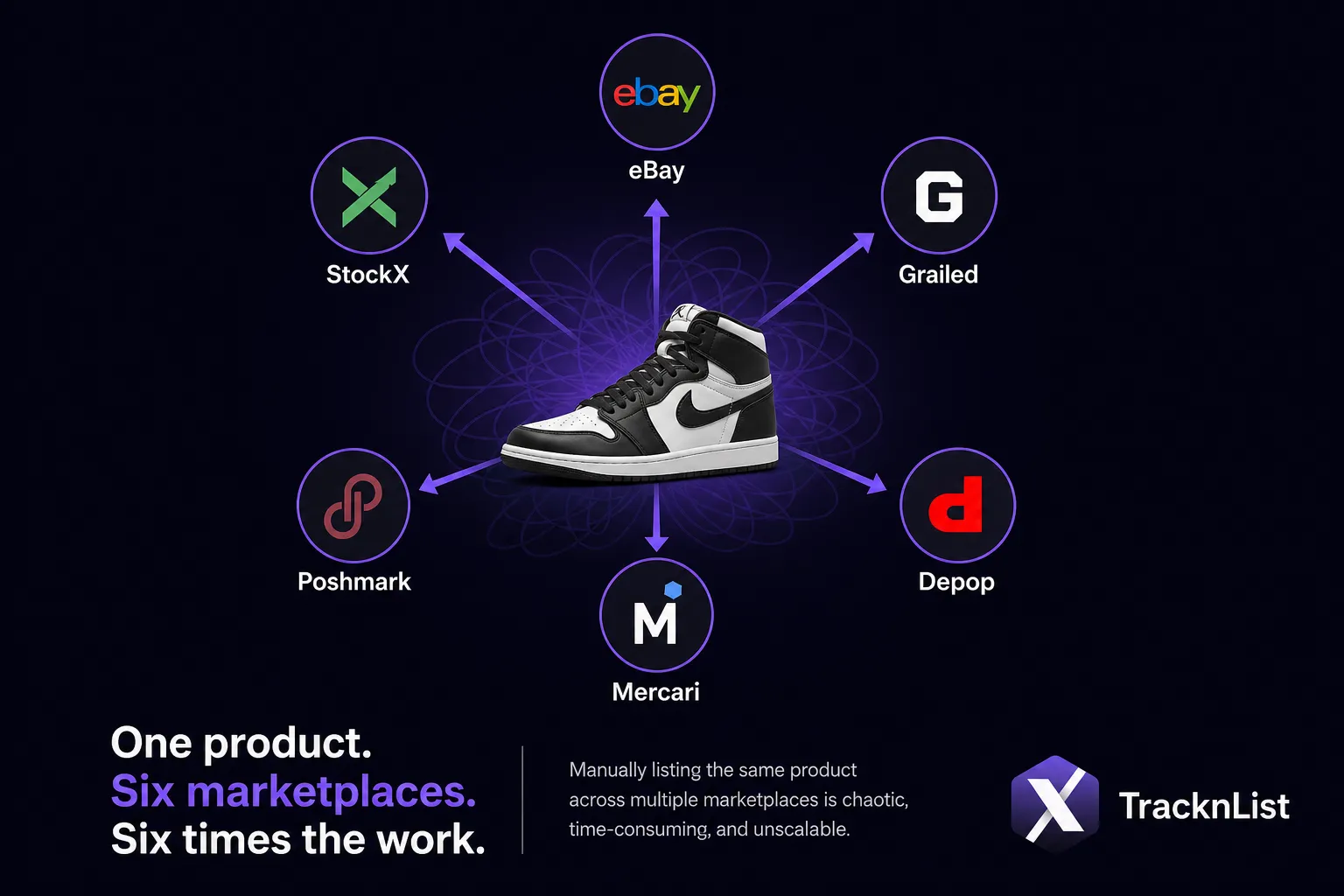
You source a clean pair of Jordan 4s. You list them on eBay, StockX, Grailed, and Poshmark. Two days later, they sell on eBay — solid. But before you can pull the other listings down, someone buys them on Poshmark too.
Same pair of shoes. Two buyers. One problem.
This is overselling, and if you've been reselling across multiple marketplaces for any amount of time, you've either experienced it or you're about to.
How Overselling Actually Happens
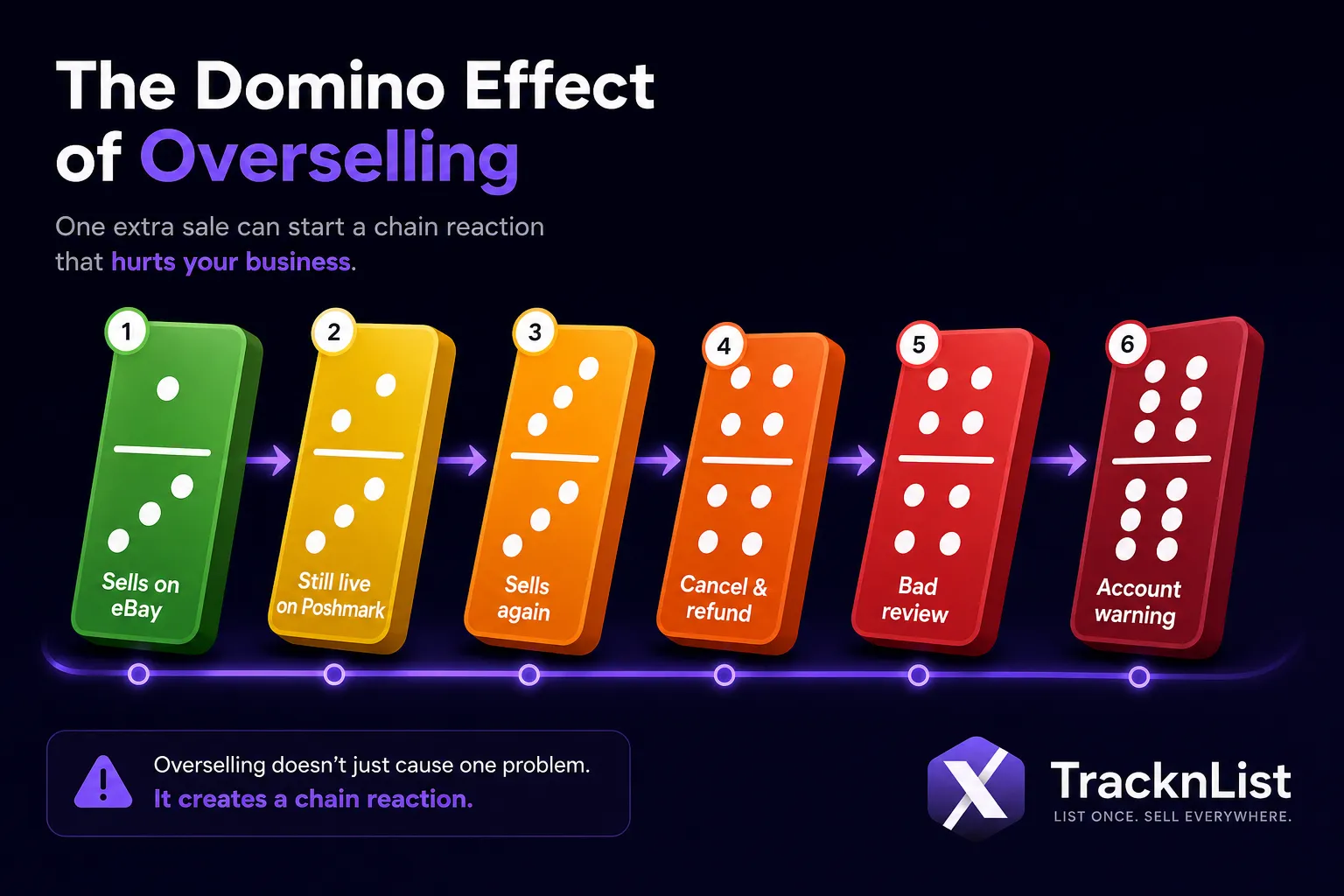
Overselling isn't a mistake you make because you're careless. It's a structural problem that comes with listing on multiple platforms.
Here's the typical scenario:
- You list an item on four or five marketplaces
- It sells on one of them
- You get the notification, but you're busy — maybe you're at your day job, sleeping, or sourcing
- Before you can manually go to each other platform and delete or deactivate the listing, someone else purchases it
- Now you have two orders for one item
The gap between "item sells on Platform A" and "you delist it from Platforms B, C, D, and E" is where overselling lives. And that gap can be minutes or hours depending on when you check your phone.
The more platforms you list on, the higher the risk. The more inventory you carry, the harder it is to keep track. It's a scaling problem that gets worse the better you're doing.
The Real Cost of One Oversell
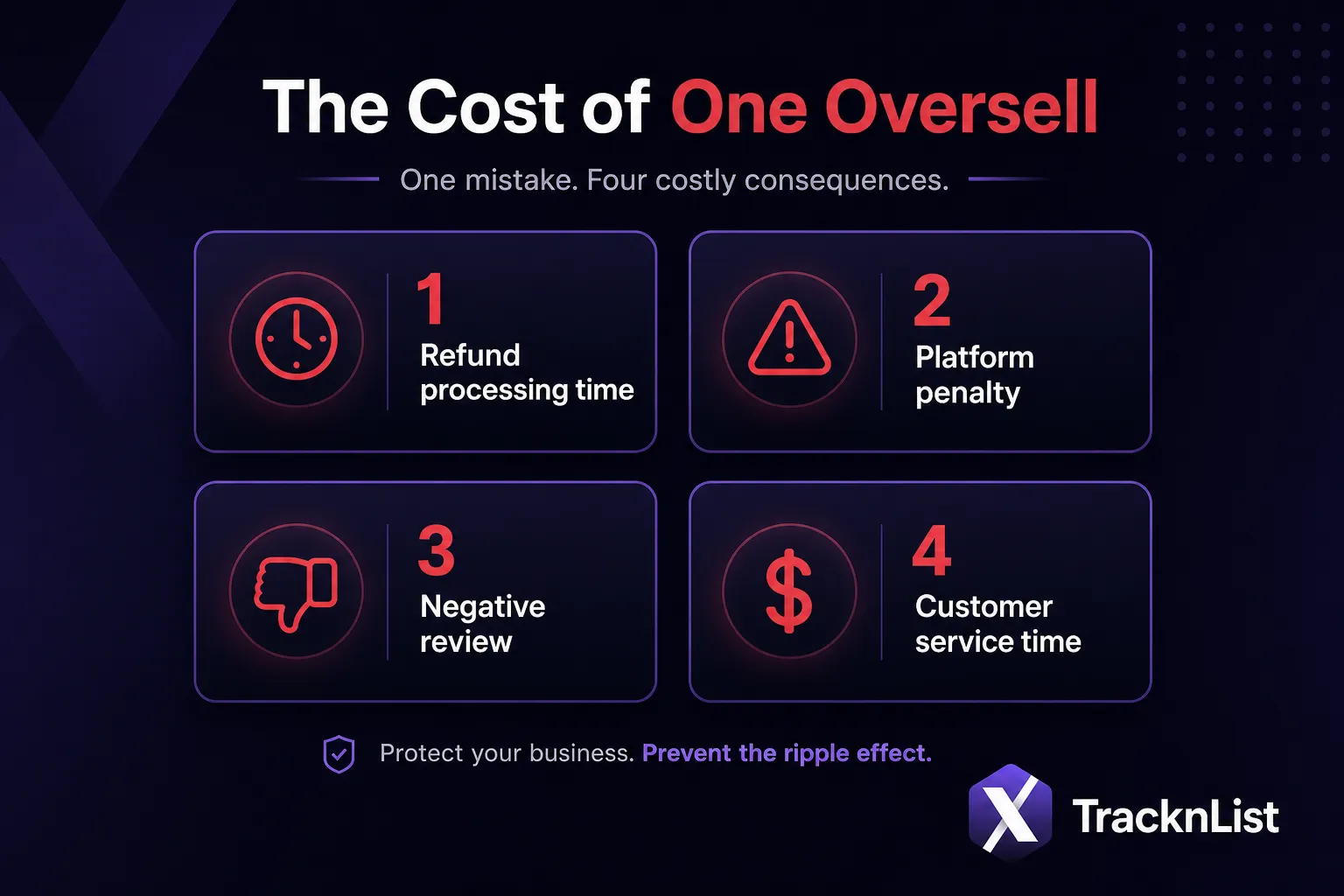
Most new resellers think overselling is just an inconvenience — cancel one order, apologize, move on. But the actual impact is worse than that.
Platform penalties. eBay tracks your cancellation rate. Too many seller-initiated cancellations and your account gets flagged, your search visibility drops, and in serious cases, your selling privileges get restricted. Poshmark, Mercari, and other platforms have similar policies. One cancellation might not hurt. A pattern of them will.
Negative reviews. The buyer who got their order canceled didn't do anything wrong. They found something they wanted, paid for it, and then got told it's not available. That's a bad experience, and some of them will leave a negative review. On platforms where reviews directly affect your visibility and trustworthiness, this is real damage.
Refund processing. Canceling an order means processing a refund, which takes time and sometimes incurs fees depending on the platform and payment method. If the buyer paid through a method with processing delays, you might be dealing with support tickets for days.
Lost buyer trust. Reselling — especially in niches like sneakers, streetwear, and vintage — relies on reputation. Buyers talk. If you're known as the seller who cancels orders, people stop buying from you. In smaller communities, word travels fast.
Your time. Every oversell takes time to resolve. Messaging the buyer, explaining the situation, processing the cancellation, dealing with potential disputes. Time you should be spending on growing your business.
The compounding effect. One oversell is manageable. But if you're listing 200+ items across five platforms and manually managing inventory, it's not a question of if it happens again — it's when. And each one chips away at your account health and reputation.
Why Manual Inventory Management Doesn't Scale
The root cause of overselling is simple: your inventory state on one platform doesn't talk to your inventory state on another.
When you list manually, you become the sync layer. You are the system that connects eBay, Poshmark, Mercari, Grailed, and everything else. Every sale, every listing change, every price update flows through you.
That works when you have 20 items on two platforms. It completely breaks down at 100+ items on four or five platforms.
Some resellers try to solve this with spreadsheets — a master inventory list where they manually mark items as sold and track which platforms they're still listed on. This is better than nothing, but it's still reactive. You're updating the spreadsheet after the sale, not preventing the double-sale in real time.
Others set phone notifications to high priority so they can immediately delist when something sells. This helps with response time, but it means you're tethered to your phone 24/7 and one missed notification is all it takes.
The fundamental issue is that manual processes can't match the speed of buyers. Someone can find and purchase your item in seconds. If your delisting process takes minutes — or hours — there's always a window where overselling can happen.
How Real-Time Inventory Sync Prevents Overselling
The only reliable way to prevent overselling across multiple marketplaces is automated, real-time inventory sync.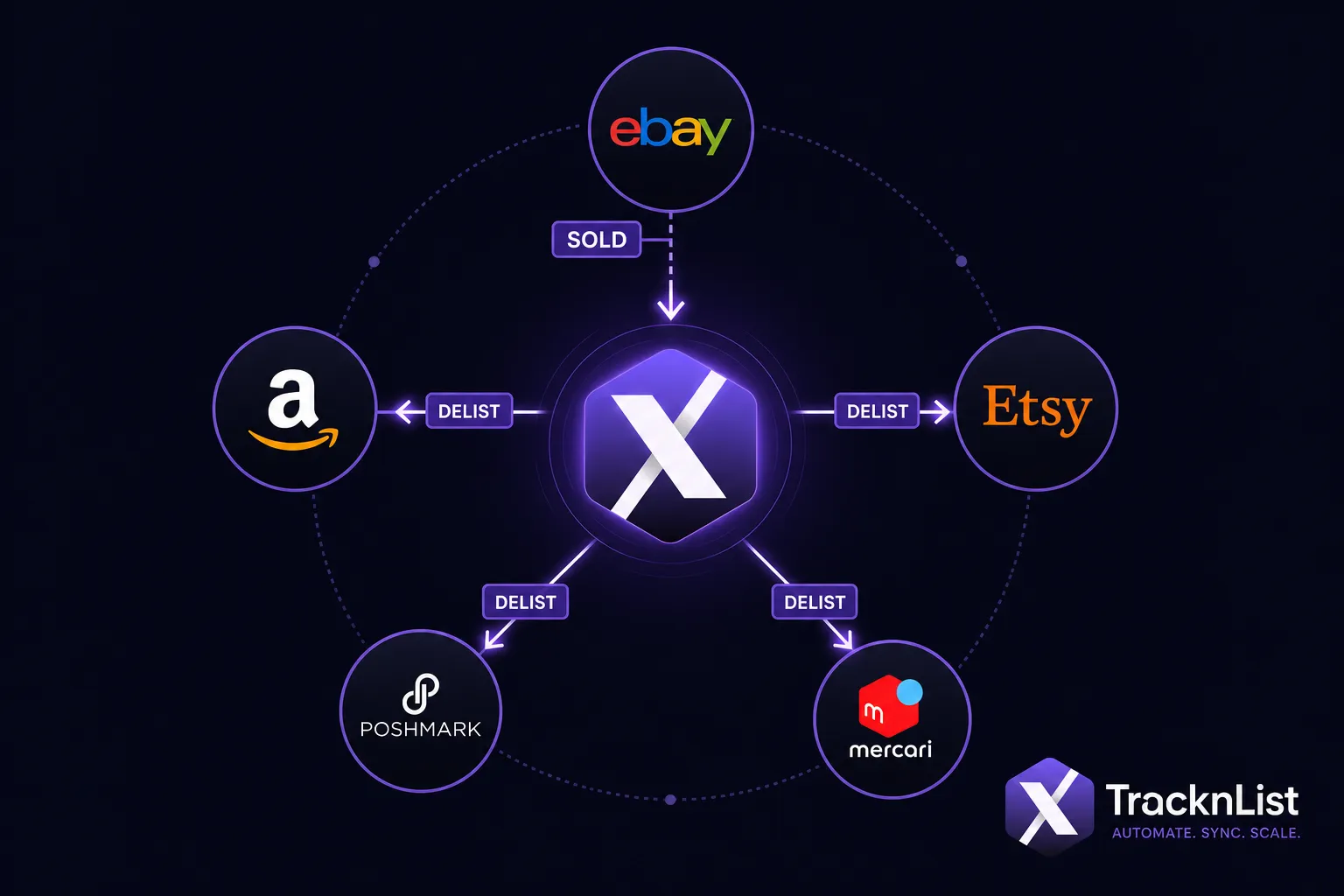
Here's how it works:
- All your inventory is managed through a central system
- When an item sells on any connected marketplace, the system detects the sale immediately
- The system automatically delists or deactivates that item on every other platform
- Your inventory count updates everywhere in real time
No manual delisting. No checking your phone. No racing to pull down listings before another buyer sees them. The system handles it in seconds, not minutes.
This is the same concept that large e-commerce operations use. Amazon, Shopify multi-channel sellers, and retail brands with both online and physical stores all use inventory sync systems. The only difference is that these tools are now available for individual resellers, not just enterprise companies.
What Good Inventory Sync Looks Like
Not every tool handles sync the same way. Here's what to look for:
Speed. How quickly does the system detect a sale and delist from other platforms? Minutes matter. The best systems do this in under a minute.
Size and variant awareness. If you sell a pair of shoes in size 10 and your listing on another platform has sizes 9, 10, and 11, the system should mark size 10 as sold — not delist the entire listing. This is especially important for apparel and sneakers.
Multi-directional sync. Sales can happen on any platform. The sync needs to work regardless of where the sale originates — eBay to Poshmark, Grailed to Mercari, or any other combination.
Sale detection accuracy. The system should correctly identify what sold, including the right size, color, or variant. A sync that marks the wrong item as sold is arguably worse than no sync at all.
Delist vs. quantity update. For one-of-one items, the system should fully delist. For items with multiple quantities, it should decrement the stock count rather than removing the entire listing.
Beyond Preventing Overselling
Real-time inventory sync solves the overselling problem, but the benefits go further:
Peace of mind. You can list aggressively on every platform without worrying about double-sells. More platforms, more exposure, more sales — without the risk.
Better account health. Fewer cancellations mean higher seller ratings, better search placement, and fewer account warnings across every marketplace you sell on.
Actual time off. You can step away from your phone without anxiety. Go source inventory, take a day off, sleep without setting alarms to check notifications. The system handles it.
Confidence to scale. The biggest reason resellers plateau isn't lack of inventory or demand — it's the operational complexity of managing more listings across more platforms. Automated sync removes that ceiling.
Protecting Your Business
Overselling is one of those problems that feels small until it isn't. One canceled order here and there is fine. But as you scale, the frequency increases, the consequences compound, and the platforms get less forgiving.
The resellers who build sustainable businesses aren't just good at sourcing and pricing. They're good at operations. And operations at scale requires systems, not spreadsheets.
If you're listing on multiple marketplaces — and you should be — make sure your inventory management can keep up with your ambition.
TrackNList automatically syncs your inventory across 10+ marketplaces in real time. When it sells on one platform, it's gone everywhere. Start your free 14-day trial →