
How to Cross-List on Multiple Marketplaces (Without Spending All Day Doing It)

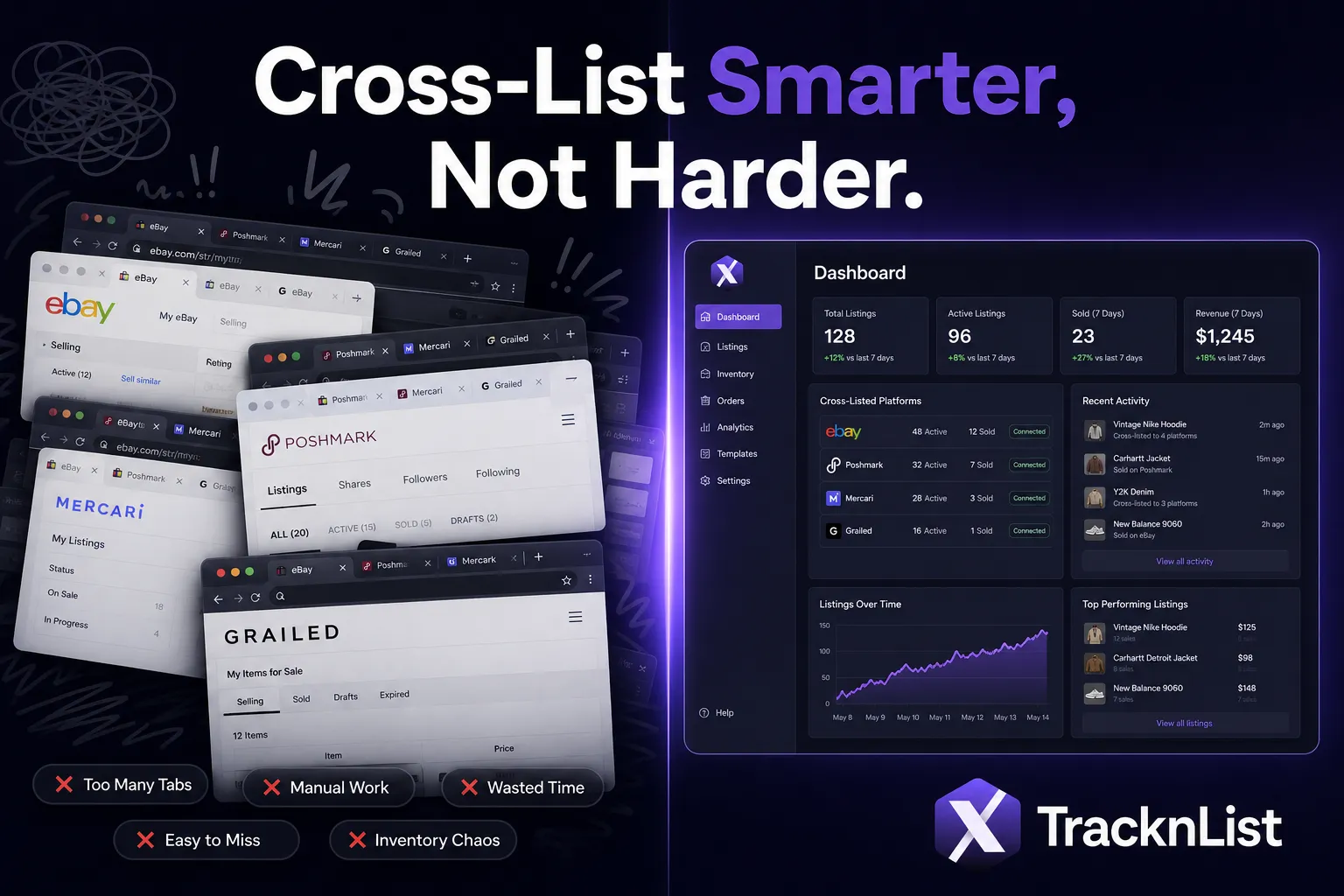
If you're a reseller, you already know the game: the more places your inventory is listed, the faster it sells. eBay, Poshmark, Mercari, Grailed, Depop, StockX, Facebook Marketplace — each platform has its own pool of buyers, and leaving money on just one of them means leaving money on the table.
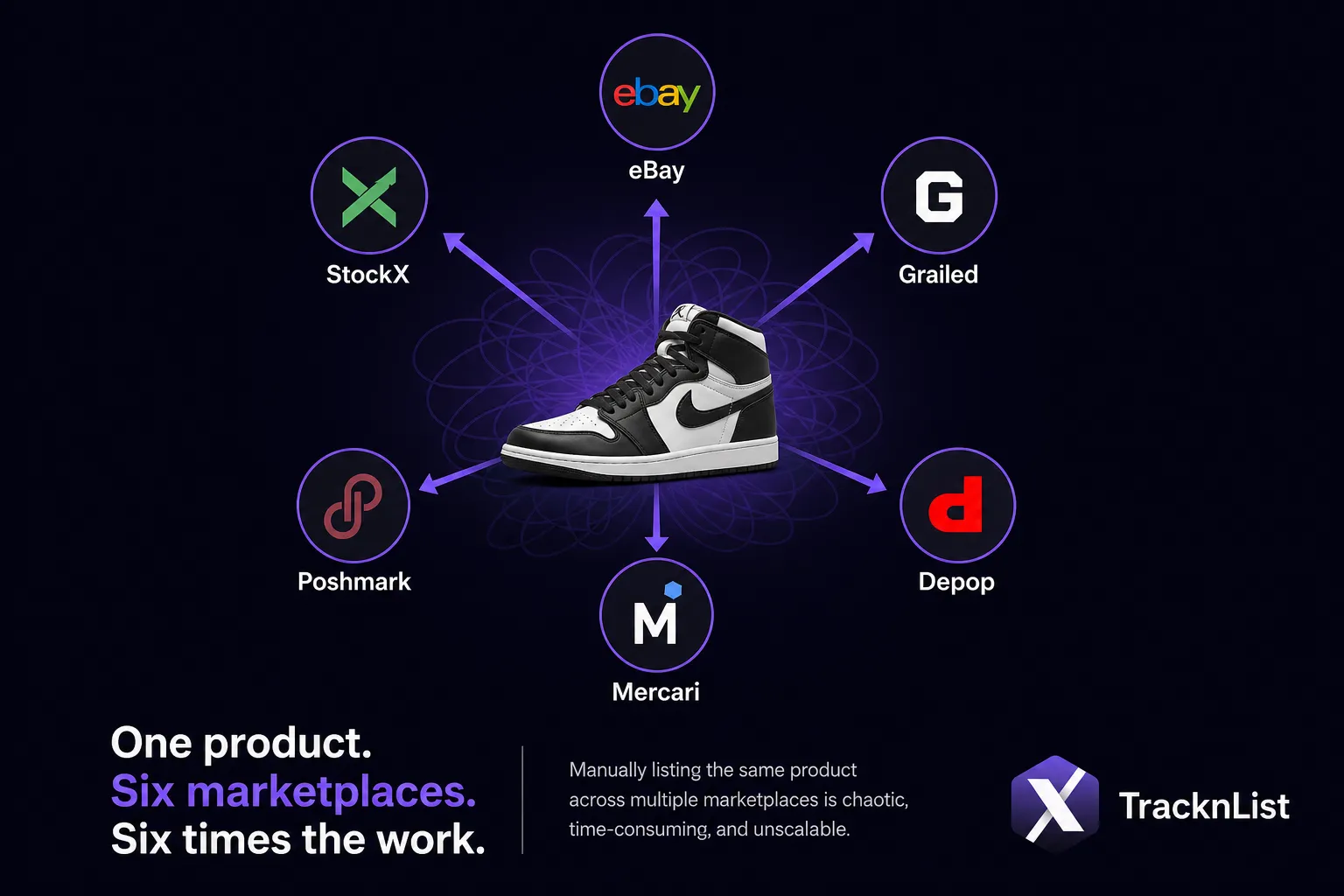
But here's the problem nobody warns you about when you start scaling: listing the same item on six different platforms takes six times the work. And that math gets ugly fast.
The Manual Listing Trap
Let's say you source 20 items this week. Solid haul. Now you need to list each one.
For every single item, you're:
- Writing a title and description
- Uploading photos
- Selecting a category and filling in item specifics
- Setting the price, shipping, and return policy
- Hitting publish
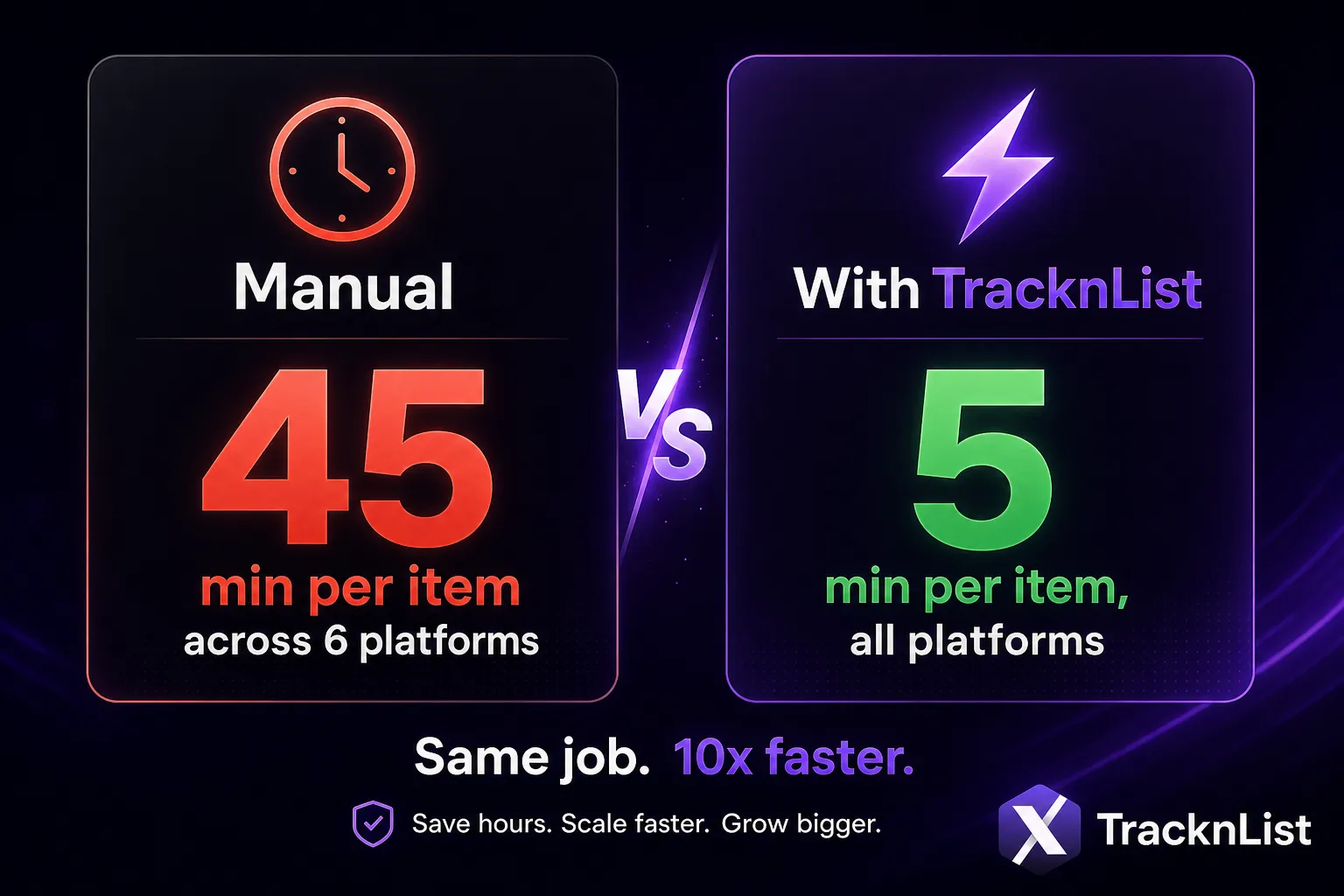
That process takes anywhere from 5 to 15 minutes per listing, depending on the platform. Now multiply that across six marketplaces. That's 120 listings for 20 items. At 10 minutes each, you're looking at 20 hours of listing work — just for one week of sourcing.
That's a part-time job. And it's not even the part of reselling that makes you money.
Most resellers hit this wall around the 50-100 item mark. You start cutting corners — maybe you skip Depop because it takes too long, or you stop listing on Grailed because formatting is different. Every platform you skip is a buyer you'll never reach.
Why Resellers List on Multiple Marketplaces
Before we talk solutions, let's be clear about why cross-listing matters in the first place:
Different platforms attract different buyers. A sneakerhead on StockX is not the same person browsing Poshmark. A vintage collector on Grailed won't see your listing on Mercari. By listing across platforms, you're casting a wider net.
Competition varies by platform. Your item might be buried on eBay where thousands of sellers compete, but it could be one of a few listings on Depop for the same product.
Faster sell-through means better cash flow. The quicker your inventory moves, the sooner you can reinvest into new sourcing. More platforms = more eyeballs = faster sales.
Price optimization. Some items sell for more on certain platforms. A pair of Jordans might fetch a higher price on StockX than on Mercari. Cross-listing lets you capture the best price wherever it comes.
The math is simple: more exposure equals more sales. The execution is what kills people.
The Real Cost of Doing It Manually
Time is the obvious cost, but it's not the only one.
Errors and inconsistencies. When you're copying and pasting the same listing across six platforms, mistakes happen. Wrong price on one platform. Outdated description on another. Missing photos somewhere else. These small errors erode buyer trust.
Overselling. This is the big one. You sell a pair of shoes on eBay, but your Poshmark listing is still live. Someone buys it there too. Now you're canceling an order, eating a potential defect on your account, and dealing with an unhappy buyer. Do this enough times and platforms start penalizing you.
Burnout. Reselling should be about sourcing, selling, and scaling — not data entry. The resellers who burn out fastest are the ones spending more time listing than actually running their business.
Opportunity cost. Every hour you spend re-listing the same item is an hour you could spend sourcing inventory, negotiating deals, or building your brand.
How Cross-Listing Tools Change the Game
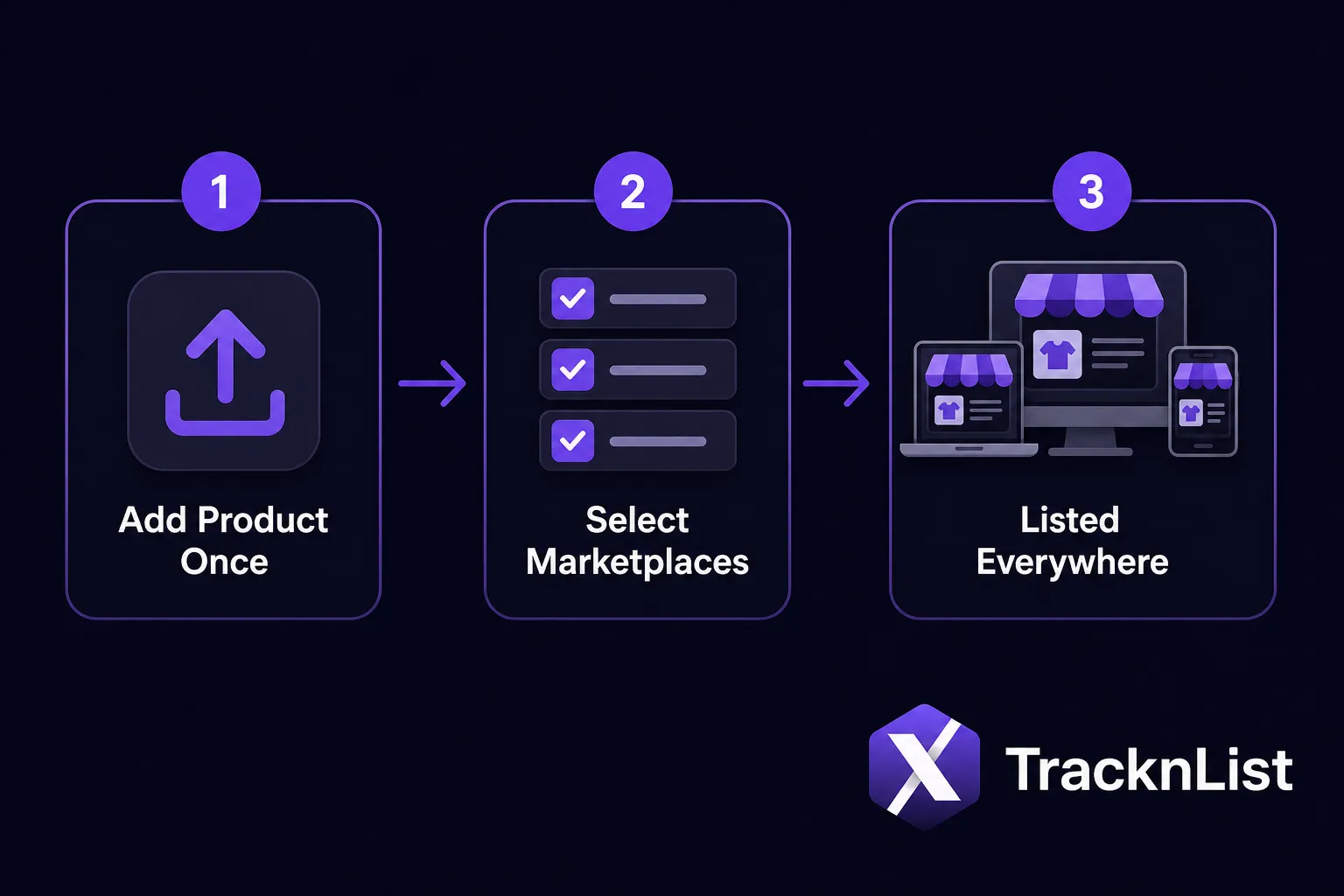
This is where cross-listing software comes in. The concept is simple: you enter your product information once, and the tool pushes that listing to every marketplace you're connected to.
Instead of 120 individual listings for 20 items across six platforms, you create 20 listings. One and done.
Here's what a solid cross-listing workflow looks like:
Step 1 — Add your product. Enter the title, description, photos, price, and item details in one place.
Step 2 — Select your marketplaces. Choose which platforms you want this item listed on. Maybe everything goes on eBay and Poshmark, but only sneakers go on StockX.
Step 3 — Publish. The tool formats your listing for each platform's requirements and pushes it live. Different platforms have different fields, categories, and photo specs — the software handles the translation.
That 20-hour listing marathon becomes a 2-3 hour session. You just got 17 hours of your week back.
What to Look for in a Cross-Listing Tool
Not all cross-listing tools are built the same. Here's what actually matters:
Marketplace coverage. How many platforms does it support? If it only covers eBay and Poshmark but you also sell on Grailed and StockX, it's not solving your problem. Look for tools that cover 10+ marketplaces.
Real-time inventory sync. This is non-negotiable. When an item sells on one platform, it needs to be automatically delisted everywhere else. Without this, you're still at risk of overselling.
Bulk operations. Can you list 50 or 100 items at once? One-by-one is still slow even if it's going to multiple platforms.
Sale detection. The tool should automatically detect when something sells and update your records. No manual tracking.
Ease of use. If the learning curve is steeper than just listing manually, nobody's going to use it.
Putting It Into Practice
If you're currently listing manually, here's how to transition:
Start with your highest-volume platform. Import your existing listings from eBay or wherever you have the most inventory. This saves you from re-entering everything from scratch.
Add platforms one at a time. Connect your Poshmark account, sync your inventory, then move on to Mercari. Don't try to set up six platforms in one sitting.
Set up your default templates. Most cross-listing tools let you create templates for item descriptions, shipping policies, and return policies. Set these up once and reuse them.
Let the sync run. Once everything is connected, trust the automation. When something sells on Grailed, it should delist from everywhere else without you lifting a finger.
The Bottom Line
Cross-listing isn't optional if you want to grow a reselling business. But doing it manually doesn't scale. At some point, you're either going to burn out copying and pasting listings, or you're going to limit yourself to one or two platforms and miss out on sales.
The resellers who are scaling efficiently have figured this out already. They list once, sell everywhere, and spend their time on the parts of the business that actually grow revenue — sourcing better inventory, building their brand, and optimizing prices.
The question isn't whether you should be listing on multiple marketplaces. It's whether you're willing to keep doing it the hard way.
TrackNList lets you cross-list across 10+ marketplaces from a single dashboard with real-time inventory sync. Start your free 14-day trial →